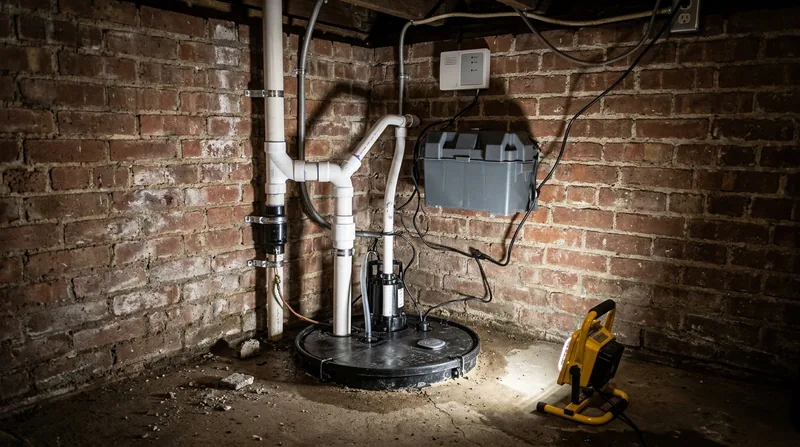




When a nor'easter stalls off Long Island or a summer downpour dumps two inches in an hour over Park Slope, the sump pump in your cellar is the only thing standing between a dry floor and four inches of water. A Battery Backup Sump Pumps in New York City setup keeps that pump running when the grid goes down, which is exactly when the storm is at its worst. In brownstones and pre-war brick rowhouses from Bedford-Stuyvesant to Bay Ridge, the sump basin sits below the water table near the harbor and tidal rivers, so a dead pump means water climbs fast. We size and install backup systems that match your pit, your primary pump, and the way your basement actually takes on water. Call (929) 392-2158 and we will tell you straight whether a battery backup is the right fix or whether your real problem is sump pump installation and replacement.
Why Battery Backup Sump Pumps Matter in New York City's Older Basements
Most of the housing stock here was built before anyone thought about basement drainage. Pre-war brick rowhouses in Brooklyn, attached brick and Tudor homes in Forest Hills and Jackson Heights, and stone houses on the hills of Riverdale all sit on old stone or brick foundation walls over fill, glacial sand, and clay. When the water table rises after a storm, hydrostatic pressure pushes water through the footing and into the sump basin at a rate a single pump can barely keep up with.
- Utility outages during nor'easters and flash-flood downpours cut power to the primary pump at the worst possible moment.
- Glacial clay soil drains slowly, so the pit refills for hours after the rain stops.
- Older sump basins in Queens and Staten Island are often undersized for the volume a modern storm delivers.
- Freeze-thaw winters crack discharge lines and freeze check valves, leaving the pump running against a blocked pipe.
A backup system buys you hours of pumping when the lights are out, and that is usually the difference between a damp floor and a flooded cellar.
Key info: In low coastal blocks of Long Beach and the Rockaways, nor'easter surge and flash-flood downpours knock out power right as the water table spikes. A battery backup sized to the pit is the only thing pumping through the outage.
How We Size and Install a Battery Backup Sump Pump in New York City
We do not sell a box and walk away. The backup has to match the primary pump's flow rate, the basin's volume, and the discharge line's rise and run. A system that is undersized for a deep Brooklyn cellar will quit before the storm does, and one that is oversized wastes money on batteries you do not need. For the permit side of any discharge or drainage alteration, the NYC Department of Buildings is the authority, and rules vary by borough and building type.
- We inspect the basin, the primary pump, the check valve, and the discharge line to confirm the backup will actually help.
- We measure the pit depth and inflow rate, then match a backup pump and battery bank to the load.
- We install the backup pump on its own float switch so it only runs when the primary fails or the power drops.
- We wire the charger, test the alarm, and run a live cycle with the primary pump disabled.
- We walk you through battery maintenance and the alarm reset before we leave.
If the inspection shows the basin itself is the problem, we will say so and point you to an interior drain tile system instead of stacking equipment on a bad setup.
Key info: A two-family brick house in Forest Hills with a shallow pit and a slow-filling basin often needs only a compact backup and a single battery. A deep cellar in Bay Ridge with a fast inflow needs a larger pump and a two-battery bank to ride out a multi-hour outage.
Backup Options We Install: Which One Fits Your Pit
There is no single right answer for every basement. The choice comes down to how much inflow your pit sees, how long outages typically last in your block, and whether you want a maintenance-free battery or a manual one you top off. Here is how the common approaches compare.
| Approach | Description | Best for |
|---|---|---|
| Battery backup pump with float switch | A dedicated 12V pump on its own float, wired to a charged battery and charger. | Most rowhouse and two-family cellars with a standard pit. |
| Combination primary and backup unit | One housing with an AC primary pump and a DC backup in the same basin. | Tight pits where two separate pumps will not fit. |
| Dual-battery bank | Two batteries wired to extend runtime through long outages. | Deep cellars with fast inflow and long storm outages. |
| High-water alarm | A float alarm that sounds before the water reaches the floor. | Any basement where you want early warning. |
| Maintenance and battery check | Annual test of the pump, float, charger, and battery health. | Every installed system, especially before storm season. |
We will recommend the smallest setup that actually covers your inflow, not the biggest one on the truck.
Battery Backup Sump Pumps Cost in New York City: What to Expect
Most residential battery backup installs here start at From $900, and that figure covers a standard backup pump, a battery, a charger, and the labor to tie it into your existing pit and discharge line. What moves the number up is the pit itself: a shallow basin that needs modification, a discharge line that has to be rerouted, a missing check valve, or a dual-battery bank for a deep cellar with fast inflow. A combination unit costs more than a standalone backup because you are replacing the primary pump at the same time.
Access matters too. A cellar in a Park Slope brownstone with a narrow stair and a finished ceiling takes longer to work in than an open basement in Staten Island. Getting two or three estimates is smart, but make sure each one includes the battery, the charger, and a live test, because a low bid that skips the battery is not a real price. Our full pricing overview lays out the ranges, and an on-site look confirms the number before any work starts.
Choosing a Battery Backup Sump Pump Contractor Near Me in New York City
Plenty of plumbers will drop a backup pump in a box and leave. A basement waterproofing specialist looks at the whole pit: the inflow rate, the check valve, the discharge line, and whether the primary pump is even the right size. Ask whether the contractor is licensed and insured, whether the estimate is in writing, and whether they will test the system with the primary pump off before they call the job done.
- Confirm the contractor carries a current license and liability insurance, and ask for a certificate.
- Get at least two written estimates that itemize the pump, battery, charger, and labor separately.
- Ask for references from jobs in your borough and call them.
- Ask who pulls any permit if the discharge or drainage connection is altered, and confirm the local building department's rule.
- Check that the contractor will explain battery maintenance and the alarm reset before leaving.
If a quote sounds too good, it usually skips the battery or the test. Reach out through our contact page and we will give you a straight answer, even if that answer is that you do not need a backup yet.
Battery Backup Sump Pumps in New York City: Pricing Guide
| Service | Price | Details |
|---|---|---|
| Standard battery backup install | Starting at $900 | Includes backup pump, battery, charger, and labor tied into an existing pit. |
| Combination primary and backup unit | Starting at $1,400 | Replaces the primary pump and adds a DC backup in one housing for tight pits. |
| Dual-battery bank upgrade | Starting at $1,800 | Adds a second battery for deep cellars with fast inflow and long outages. |
| Pit or discharge line modification | On estimate | Needed when the basin is undersized or the discharge line must be rerouted. |
| Travel | Included | In New York City and surrounding areas, no separate call-out or mileage fee. |
| Estimate | Free | Response within 24h at (929) 392-2158, no obligation to book. |
Indicative pricing, the exact cost depends on square footage, finish, and site access. Free personalized estimate within 24h at (929) 392-2158.


