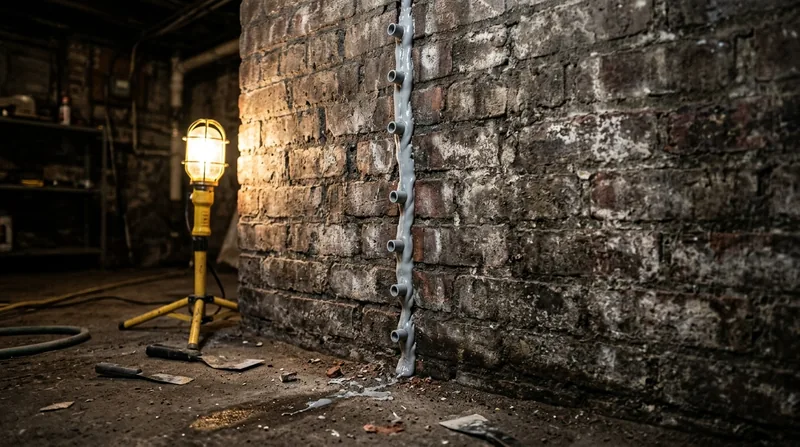




Foundation Crack Repair in New York City
When a crack opens in a cellar wall in Park Slope or a poured foundation in Forest Hills, it rarely stays a cosmetic line for long. New York City sits on fill, glacial sand and clay over bedrock schist, and the water table near the harbor and tidal rivers pushes moisture hard against below-grade walls. We handle Foundation Crack Repair in New York City as a diagnostic trade first and a repair trade second, because a hairline in a brownstone cellar and a widening crack in a Staten Island block wall are two different problems. Some cracks only need epoxy injection. Others are telling you the wall is moving and the repair has to address the movement. We inspect every crack, match it to the right method, and tell you plainly when simple sealing is enough. For the broader picture on keeping water out, see our basement waterproofing service.
Why Foundation Cracks Open in New York City's Older Housing Stock
Most of the housing here was built before 1960, and much of it sits on fill or glacial clay that expands and contracts with the seasons. Pre-war brick rowhouses in Bedford-Stuyvesant and Bay Ridge have old stone or brick foundation walls that were never designed for today's groundwater loads. The freeze-thaw cycle widens existing cracks a little each winter, and nor'easter downpours push hydrostatic pressure against walls that have already lost some of their mortar. In Riverdale and St. George, houses on sloped ground deal with lateral soil pressure that can bow a wall over time.
- Settlement cracks show as diagonal lines near corners and typically follow the path of least resistance through mortar joints.
- Hydrostatic pressure cracks appear as horizontal or stair-step patterns and often come with efflorescence or a white mineral bloom on the wall.
- Shrinkage cracks in poured concrete are usually vertical and narrow, and many are stable enough for injection alone.
- Freeze-thaw cracks in older block and brick walls open wider each season and let in water that then freezes behind the face.
The crack pattern tells us what is happening below grade, and that is why we do not quote a patch before we have seen the wall.
Key info: In a Jackson Heights two-family with a block foundation, a stair-step crack running from a window corner is almost always a sign of differential settlement, not just a water leak. Sealing it without addressing the movement is a temporary fix at best.
For official guidance on what work requires a permit in the five boroughs, check the NYC Department of Buildings, since structural foundation repair and drainage alterations fall under local review.
How We Repair Foundation Cracks in New York City
Every job starts with a walkthrough of the basement and the exterior grade. We map the crack, check for moisture, look at the footing drain and the downspout discharge, and test whether the crack is active.
- We inspect the crack and the surrounding wall, including the exterior grade and any sign of settlement, before we quote anything.
- We drill injection ports along the crack at the spacing the crack width and wall material call for.
- We flush the crack with water or compressed air to clear loose mortar and debris so the resin reaches the full depth.
- We seal the surface with a fast-set epoxy paste and then inject the chosen resin from the bottom port up until it reaches the next port.
- We let the resin cure, cut the ports flush, and check the wall for any missed voids or secondary cracks.
- We recommend a follow-up step when the crack points to a drainage problem, such as an interior drain tile system or a sump upgrade.
If the inspection shows the crack is a symptom of water pressure rather than a structural break, we say so and point you to the right repair instead of selling an injection that will not hold.
Key info: A 1950s brick Colonial in White Plains had a vertical crack in a poured wall that leaked after every heavy rain. Polyurethane injection stopped the leak in one visit, but the downspout was dumping water at the corner of the foundation. Extending the discharge line was part of the fix, not an upsell.
When the crack comes with a wet floor or a failed sump, the better answer is often an interior drain tile system that manages the water before it reaches the wall.
Repair Methods We Match to Each Crack
Not every crack gets the same treatment, and the table below shows how we decide. The right method depends on whether the crack is active, how wide it is, what the wall is made of, and whether there is any sign of movement. We carry the materials for all of these on the truck, so the decision is made on site after the inspection.
| Approach | Description | Best for |
|---|---|---|
| Epoxy injection | Structural resin bonded into the crack to restore wall strength. | Stable, non-leaking cracks in poured concrete walls. |
| Polyurethane injection | Flexible foam resin that expands and seals active leaks. | Wet, seeping cracks in block or brick foundation walls. |
| Carbon fiber straps | Straps anchored to the wall to resist inward movement. | Cracks paired with a bowing wall or lateral soil pressure. |
| Wall anchors | Exterior anchors that pull a moving wall back toward plumb. | Walls that have moved significantly and need realignment. |
| Drainage correction | Grading, downspout extensions, or drain tile to relieve pressure. | Cracks that keep reopening because water is still pushing. |
The repair only holds when the cause is addressed, so we treat the crack and the water source as one job.
Foundation Crack Repair Cost in New York City: What to Expect
Most single-crack injections in New York City start around $450, and that figure covers a standard non-structural crack in an accessible wall. The price moves up with crack length, wall thickness, and access. A cellar wall behind a finished partition or a boiler takes more time than an open wall in a Bay Ridge basement. Cracks that need carbon fiber straps or wall anchors are structural repairs and get quoted on site after the inspection.
Older brick and stone foundations in Manhattan and Brooklyn often need more prep because the mortar joints are soft and the crack may not be a clean line. Multiple cracks, active leaks, and any sign of bowing all add to the scope. We give you a written number after the walkthrough, not a phone estimate that changes on the day. Our pricing overview shows the ranges for the work we do.
Getting two or three estimates is smart in this market because the diagnosis matters more than the price. A contractor who quotes injection without checking the exterior grade or the drain tile may be selling you a repair that fails next spring. Compare what each estimate includes, not just the bottom line.
Finding a Foundation Crack Repair Contractor Near Me in New York City
Hiring for below-grade work is different from hiring for above-grade trades, and the questions you ask should reflect that. The contractor should be licensed and insured, should be able to explain why a particular crack needs injection rather than a patch, and should be willing to put the scope in writing. Ask whether they carry general liability and workers' compensation, and ask for a certificate before work starts.
- Confirm the license and insurance, and ask for the certificate rather than taking a verbal assurance.
- Get at least two or three written estimates that describe the method, not just the price.
- Ask for references from jobs in similar housing stock, such as pre-war brick or poured-wall Colonials.
- Ask who pulls any permit the local building department requires for structural repair.
- Check that the estimate covers cleanup, port removal, and a follow-up inspection.
A contractor who cannot explain the difference between epoxy and polyurethane is not the right person for a foundation wall, however good the price looks.
If you want a straight read on your crack before you commit to anything, contact us for a free estimate and we will tell you what the wall is doing.
Foundation Crack Repair in New York City: Pricing Guide
| Service | Price | Details |
|---|---|---|
| Single crack, polyurethane injection | Starting at $450 | Covers one accessible non-structural crack, port drilling, resin, and cleanup; length and wall access move the price. |
| Single crack, epoxy injection | Starting at $550 | Structural bonding for a stable poured-wall crack, including surface prep and port removal after cure. |
| Multiple cracks or block wall | Starting at $850 | Several cracks or soft mortar joints that need extra prep; total depends on count and reachability. |
| Structural repair (straps or anchors) | On estimate | Bowing or moving walls need an on-site look at movement, soil pressure, and anchor placement before pricing. |
| Travel | Included | In New York City and surrounding areas, no separate call-out or mileage fee. |
| Estimate | Free | Response within 24h at (929) 392-2158, no obligation to book. |
Indicative pricing, the exact cost depends on square footage, finish, and site access. Free personalized estimate within 24h at (929) 392-2158.


