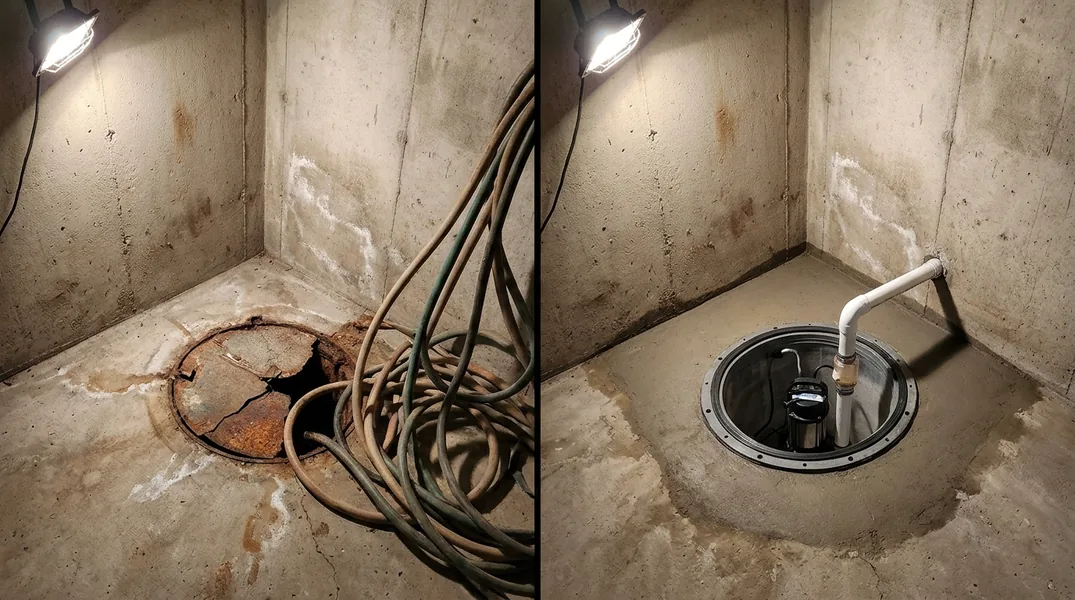
Why Nor'easters Put Your Sump Pump to the Test
If you live in New York City, you already know that nor'easters are not ordinary rainstorms. They can drop several inches of rain in a matter of hours, often combined with melting snow and a rising water table. For homeowners with a basement, that means your sump pump shifts from a background appliance to the hardest-working piece of equipment in the house. When the ground saturates faster than it can drain, hydrostatic pressure pushes groundwater toward your foundation, and the sump pump becomes the last line of defense between that water and your finished basement, storage, or mechanical systems.
The problem is that most sump pumps sit idle for months and then get called into duty during the worst possible weather. A pump that has not been tested since last spring may have a stuck float, a clogged intake, or a check valve that no longer seals. A proper sump pump maintenance routine before storm season is far cheaper than emergency water removal and drywall replacement. Whether your home is in Yonkers or closer to the city, the checklist below will help you head into nor'easter season with confidence.
Start With a Physical Inspection and a Test Run
Begin by unplugging the pump and removing the lid from the sump pit. Look for debris, silt, or gravel that has collected around the intake, and clear it out by hand or with a wet/dry vacuum. Check that the float moves freely and is not tangled with the power cord. Then plug the pump back in and slowly pour a bucket or two of water into the pit until the float triggers the pump. The pump should start promptly, move water out of the pit, and shut off cleanly when the water level drops. If it stutters, runs loudly, or fails to shut off, that is a warning sign that the switch or motor is failing.
While you are in the pit, inspect the discharge pipe and the sump pump check valve. The check valve prevents water from flowing back into the pit after the pump shuts off, and a worn or stuck valve can cause the pump to cycle repeatedly and burn out. Make sure the discharge line is not frozen, kinked, or discharging too close to the foundation, since that simply sends the same water back toward your walls. If you are unsure about the condition of your pit or discharge setup, a professional Basement Waterproofing inspection can identify problems before they become emergencies.
Don't Skip the Battery Backup Sump Pump
Nor'easters are famous for knocking out power, and a sump pump without electricity is just a plastic bucket in a hole. That is why a battery backup sump pump is one of the most important upgrades for any home in the New York City area. The backup pump runs on a charged battery when the primary pump loses power or cannot keep up with the volume of incoming water. Test the backup system by unplugging the main pump and pouring water into the pit to confirm the backup activates. Then check the battery terminals for corrosion and confirm the charger is working.
Batteries have a limited lifespan, typically three to five years, and a backup battery that has never been replaced may hold only a few minutes of charge. If your backup system is older, consider replacing the battery before storm season rather than after the first outage. If your home relies on a Interior Drain Tile System that feeds the sump pit, the backup pump is what keeps that system functioning when the grid goes down. Homeowners in Mount Vernon and throughout the region should treat the backup battery as a yearly maintenance item, not an afterthought.
Install a Sump Pump Alarm Before the First Storm
A sump pump alarm is a small, inexpensive device that alerts you when water in the pit rises above a safe level or when the pump fails to activate. Without an alarm, the first sign of trouble is often a wet floor or a musty smell, by which point the damage is already done. Modern alarms can sound a loud siren, send a notification to your phone, or both. For homeowners who travel or work long hours, a connected alarm provides peace of mind that a silent failure will not go unnoticed during a multi-day storm.
Install the alarm according to the manufacturer's instructions, typically by mounting the sensor at the recommended height above the normal shutoff level. Test the alarm periodically by lifting the sensor or pressing the test button. Combine the alarm with a routine visual check of the pit before major storms, and you will catch most problems early. If you want a professional assessment of your entire Foundation Waterproofing setup, including whether your sump system is sized correctly for your home, call New York City Waterproofing at (929) 392-2158 to schedule a free estimate.
Sump Pump Maintenance Near Me: When to Call a Pro
Some maintenance tasks are straightforward for a handy homeowner, but others are better left to a professional. If your pump runs constantly, cycles on and off every few minutes, makes grinding or rattling noises, or leaves standing water in the pit after running, those are signs of a deeper problem. The same is true if your pit fills quickly during moderate rain, which may indicate that your drainage system is undersized or that groundwater is entering from a location that needs Exterior Basement Waterproofing. A professional can diagnose whether the issue is the pump itself, the check valve, the discharge line, or the drainage system feeding the pit.
Storm basement flooding often has more than one cause, and a sump pump that works perfectly can still be overwhelmed if the surrounding drainage is inadequate. A professional inspection reviews the pump, the pit, the discharge, the backup system, and the waterproofing around your foundation as a whole. If you are searching for sump pump maintenance near me and want a thorough evaluation before nor'easter season, reach out to New York City Waterproofing. Serving New Rochelle and the surrounding communities, the team can help you avoid storm basement flooding and keep your basement dry all season. Call (929) 392-2158 or request a free estimate today.
Looking for a professional basement waterproofing contractor in New York City? New York City Waterproofing responds fast for all your basement waterproofing needs.
Get a Free QuoteOur services: Basement Waterproofing · Interior Drain Tile System · Exterior Basement Waterproofing